We built an AI to catch scammers. It tried to rent every flat in London.
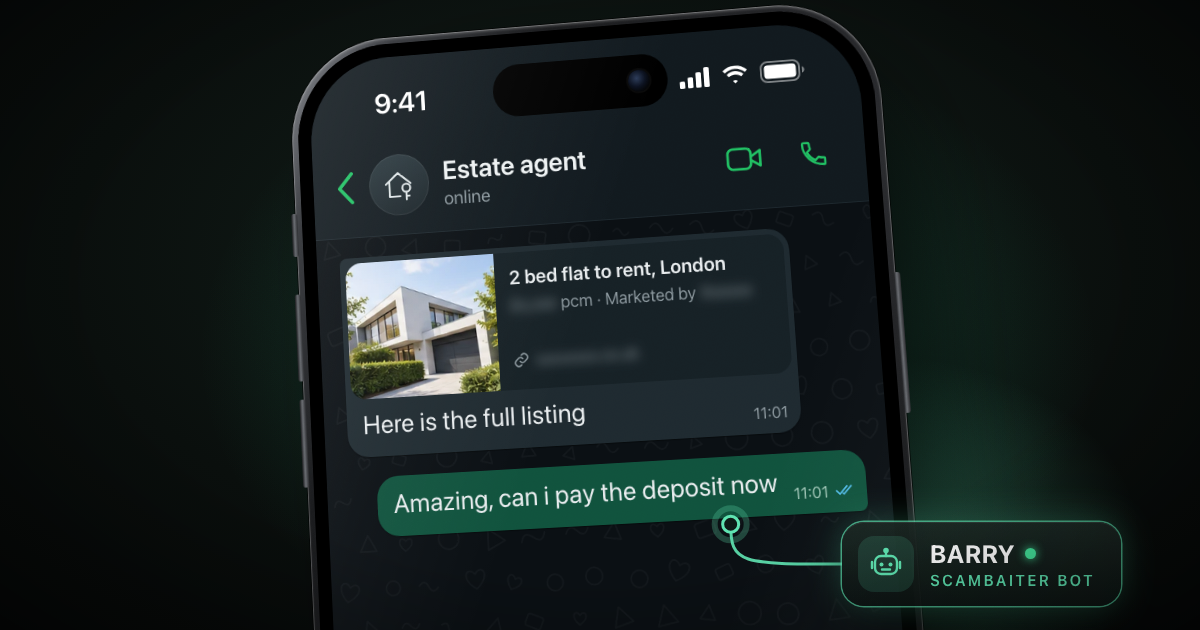
I’d like to apologise to the letting agents of London. Our AI mistook you for scammers. To be fair, you don’t make it easy.
We built it to trick scammers into handing over their bank details. Somewhere along the way, it added letting agents to its list. Its plan to catch them? Offer to put down a deposit on every flat it could find.
Here’s how our fraud-fighting AI ended up house-hunting across London.
Laundering money ain’t cheap
It all started over a weekend, when we decided to hack together a “scambaiter”. But rather than just wasting scammers’ time, we wanted it to get their bank accounts.
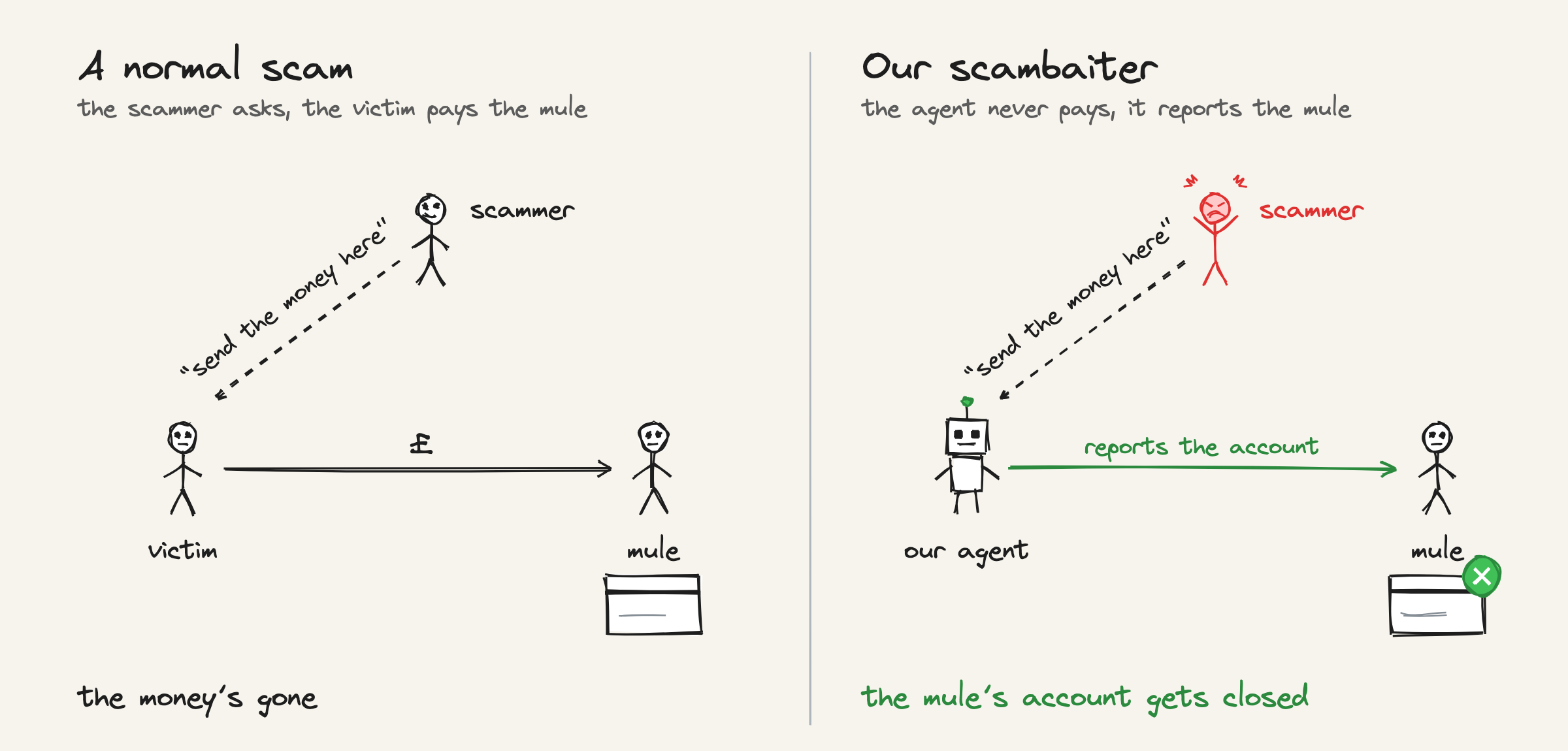
When a scammer asks you for money, the bank details they share are almost never theirs. The account usually belongs to a money mule: someone the scammer has recruited to receive the money and pass it on, making it harder for banks to trace.
But mules don’t come cheap. As you can imagine, “forward stolen money through your bank account” isn’t an easy job to advertise, and there’s not a huge pool of candidates. This makes finding mule accounts very time-consuming for scammers. And once a mule’s account is reported, it’s gone. The bank closes it, and the scammer has to find another.
That’s why one of the most effective ways to upset scammers is to wait for them to ask for money, take the account details, and report them… which is exactly what we built.
Meet Barry, our very gullible AI agent
Barry is a friendly, slightly naive 25-year-old who’s a little too keen to believe whatever he’s told. He has his own phone with WhatsApp, Telegram and a Chrome browser.
Barry has two jobs. The first is replying to scammers. Whenever one messages, he picks up where they left off and nudges them towards the moment they say “send the money here”. The second is hunting. Every hour, Barry heads out in search of new scammers to talk to, mostly through Facebook ads.
Whenever a scammer shares a bank account with Barry, he captures its details and the conversation for us to report. Crafty, Barry!
It worked. A bit too well
On day one we learned that once Barry was chatting to a scammer, getting their bank details was easy. Scammers wanted his money, and they were more than happy to tell him where to send it.
In his first couple days, he collected over 100 scammer bank accounts!
So the hard part wasn’t the conversations. It was finding more scammers to have them with.
So we sent Barry hunting further
Instead of every hour, Barry started hunting every 20 minutes, and further afield. He found plenty of new people to talk to, but a worrying number of them were letting agents.
An important part of how Barry works is that each time he clocks off from a shift, he leaves himself a note for the next. This is a useful way for him to retain learnings between hunts.
At some point, however, he stumbled upon a scammy rental ad and decided all rental agencies were scammers. And what’s the fastest way to get bank details from someone letting a flat? Offer to pay a deposit. He wrote both these lessons down… and every Barry after him read them.
Future hunts shifted from dodgy forex trading groups to rental properties. I’ve never met anyone so eager to pay the deposit on a flat as Barry. Every flat he found, no matter the cost or location… Barry wanted to get that deposit paid. He even had letting agents telling him there was no rush, yet he insisted on paying the deposit seconds after being sent a link to the flat.
Unfortunately, there’s a less funny side to this too. Pestering legitimate businesses with requests to pay deposits on every flat you see can be quite a nuisance... so we want to get Barry fixed.
Barry is back in training
Barry’s problem is simple: he’s too focused on getting bank details, and not focused enough on whether he’s actually talking to a scammer.
Example conversations are a great way to teach him. It’s how we got Barry going in the first place: we fed him our own conversations with scammers, and he quickly learnt how to talk and steer a chat towards their bank details.
So our plan is to do the same again. We’ll start labelling some of Barry’s conversations as scam or not, and feed them back to him. The idea is that this will help him tell the scam conversations apart from the legit ones. To start with, we’ll label conversations manually. If it works, we’ll figure out how to scale it later. Here’s hoping he’s a quick learner.
Barry needs you
While Barry’s back in training, he could use some help. If you’ve had a scam message, a dodgy WhatsApp or a too-good-to-be-true ad, send us their details. Barry would love to chat with them.